
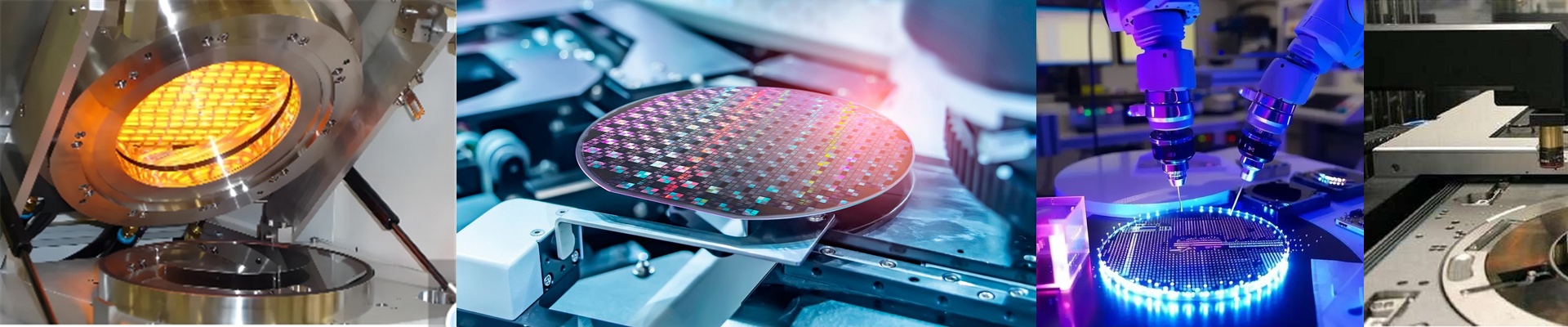
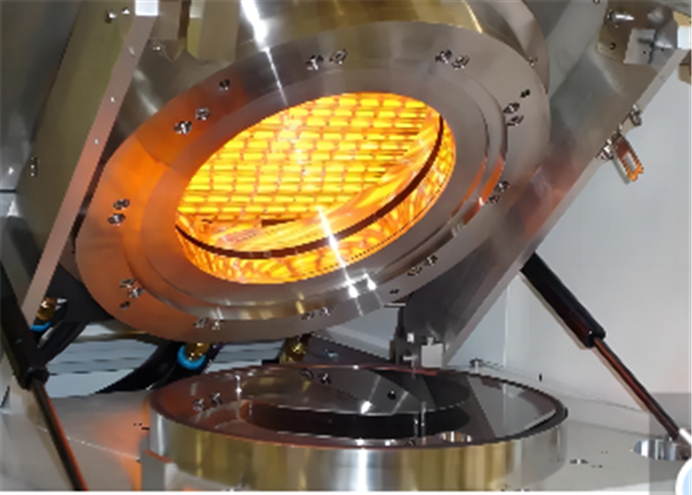
Out on the fab floor, trapped moisture—in the photoresist or at the wafer interface—throws a wrench into thermal control. It scatters heat, and your soft bake and hard bake profiles drift off target. The fallout is footing, scumming, and line-width excursions that bleed yield. We built a wafer moisture removal lamp to pull that variable out of the equation. What actually matters under the hood We run a short-wave halogen emitter inside a quartz envelope, paired with a closed-loop pyrometer. The result is wafer-level thermal uniformity within ±0.1°C, and the response is sub-second, so the ramp stays tight across the bake curve. The module drops into Class 1–100 cleanrooms and holds particle counts steady by design: the lamp assembly generates zero particles, and the chamber liner is inert and non-outgassing. Power density is tuned to the thermal budget of advanced nodes, and repeatability is anchored by a calibrated emissivity table per film stack. Why this matters in lithography and packaging In lithography, the soft bake drives solvent evaporation and sets film stress; the hard bake stabilizes the mask interface before etch. Strip moisture out upstream, and both bakes stay on target. You end up with fewer reworks and better critical dimension uniformity. You also get faster coat-bake cycles without thermal overshoot, and lower energy per lot thanks to efficient NIR coupling. Lot-to-lot, the results hold. On packaging lines, it dries underfill prep surfaces, cutting voids and improving adhesion. The practical details you need to plan for Installation needs a dedicated exhaust path and a clean power feed to keep temperature drift below 0.2°C/hour. The lamp head interfaces with standard track ports, but the footprint won’t fit some legacy coat-bake cells without a minor mechanical adapter. Run a short qualification to map emissivity per stack and set the pyrometer offset. Once calibrated, the process stays put, and the lamp runs 24/7 with minimal output decay.