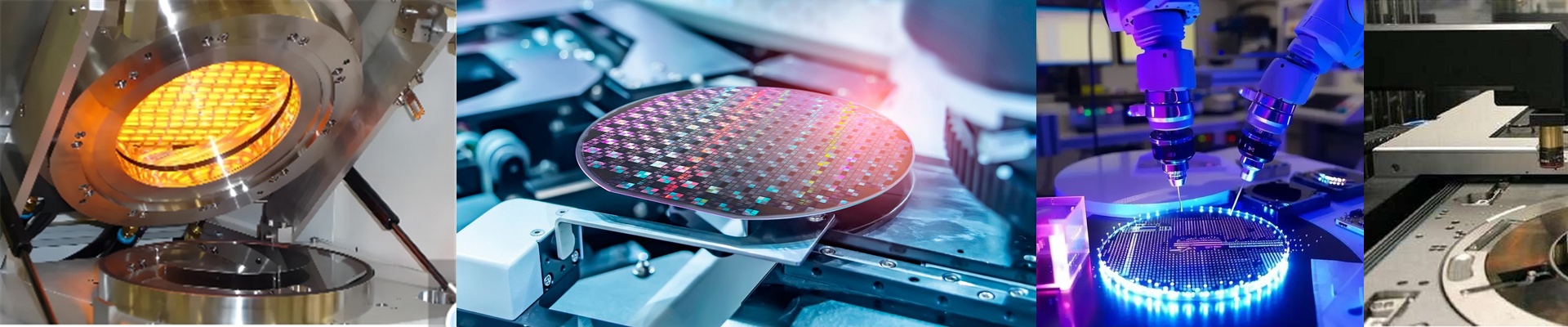

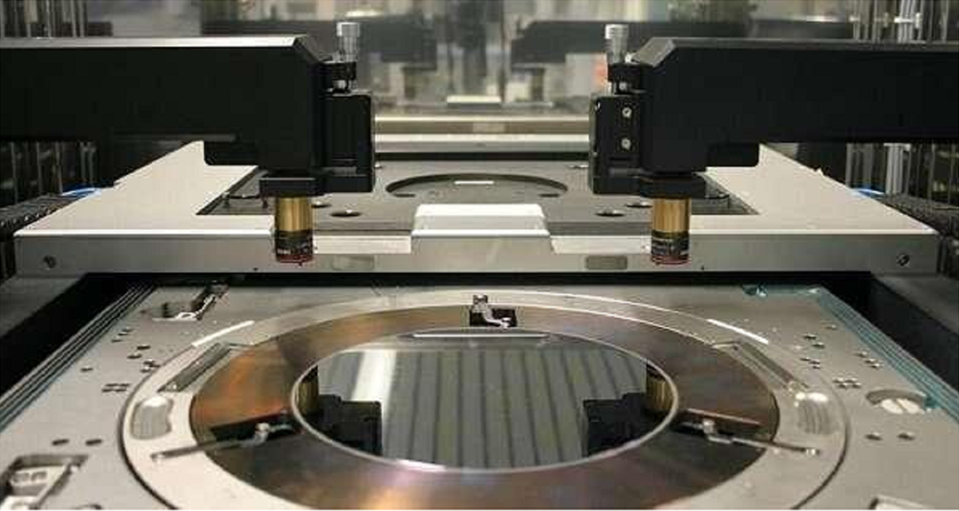
On the fab floor, a drift in drying temperature isn’t a small tolerance issue. It hits yield, hard. The soft bake and hard bake windows are already tight, and if the thermal profile isn’t uniform across the wafer, you’ll see it as dimensional error after exposure. We built this wafer drying lamp bulb to stop that drift at the source. What matters under the hood We use short-wave halogen elements in quartz envelopes, chosen for fast response and stable spectral output. The lamp holds ±0.1°C steady-state uniformity across the chuck, with setpoint repeatability within ±0.5°C. The output is calibrated for 300–400 nm to match photoresist absorption, so solvent evaporation stays consistent without overshoot. It drops into standard lamp sockets, with defined voltage and power ratings, and meets cleanroom compatibility from Class 1 to Class 100. The sealed geometry and low-outgassing materials keep particle generation down, preserving particle counts at the process level. Here is why it works in lithography. The drying step sets the baseline for line-width control and defect density. With this bulb, the thermal budget stays stable, so your soft bake profiles stay in spec and your hard bake crosslinking is repeatable. The payoff is practical. Fewer rework lots, tighter critical dimension distribution, and cycle time that behaves predictably. Energy use drops thanks to efficient conversion and fast stabilization, and you get 5,000+ hours of service life with less than 5% output drop, which cuts down on spare parts. A few field notes. Installation means matching the lamp to the tool’s reflector geometry and thermal control loop. Check chuck emissivity and sensor placement — otherwise you risk overshoot. The bulb has a defined temperature operating range. If you exceed it, particle risk goes up and life drops off. Use compatible fixtures, and handle with clean protocol so you don’t introduce contamination.