
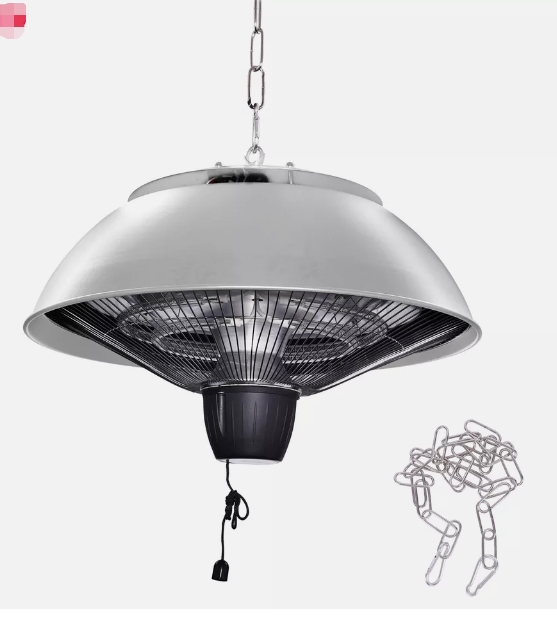
Why Your Bathroom Heater Needs “Explosion-Proof” Quartz
Let’s be honest: bathroom heating lamps have one of the toughest jobs in the house. You’ve got crazy temperature swings and steam everywhere. When you put a high-wattage infrared bulb in a ceiling fixture, that thin glass tube is basically the only thing keeping live electricity away from a wet room. It’s a high-stakes setup.
The problem with regular glass
Standard quartz is a bit temperamental. Imagine a tube glowing at 800°C. Now imagine a single, cold drop of water hitting it. The glass shrinks too fast, the tension spikes, and—pop—it shatters. It’s not just about losing your heat; it’s about having broken glass and exposed wires in a room full of steam. Not a great feeling. That’s why we use explosion-proof quartz. It’s built to handle those sudden shocks without cracking. And if things go truly sideways and the tube does fail, it doesn’t explode outward. Instead, it just crumbles into tiny, dull pieces. It’s a much safer way to fail.
Getting the heat right
These lamps use shortwave infrared. The best part? You feel the warmth on your skin instantly. You aren’t waiting for the air in the room to warm up; you just feel it. We pack these tubes with halogen gas to help the filament last longer, which means the internal pressure is pretty high. Because of that, you have to make sure your fixture can actually handle the wattage. If the airflow is blocked, that intense heat can actually warp your plastic or metal housing.
A few tips for the install
Here is the thing: the glass might be tough, but the connectors are usually the weak spot. If moisture sneaks into the terminals, you’ll get arcing. To stop that, always use a moisture-resistant gasket. The fancy glass handles the heat, but it can’t save you from a sloppy electrical connection. Also, don’t be surprised when the light dims a bit after about 3,000 hours. That’s just how these high-temp elements work. It’s normal.