
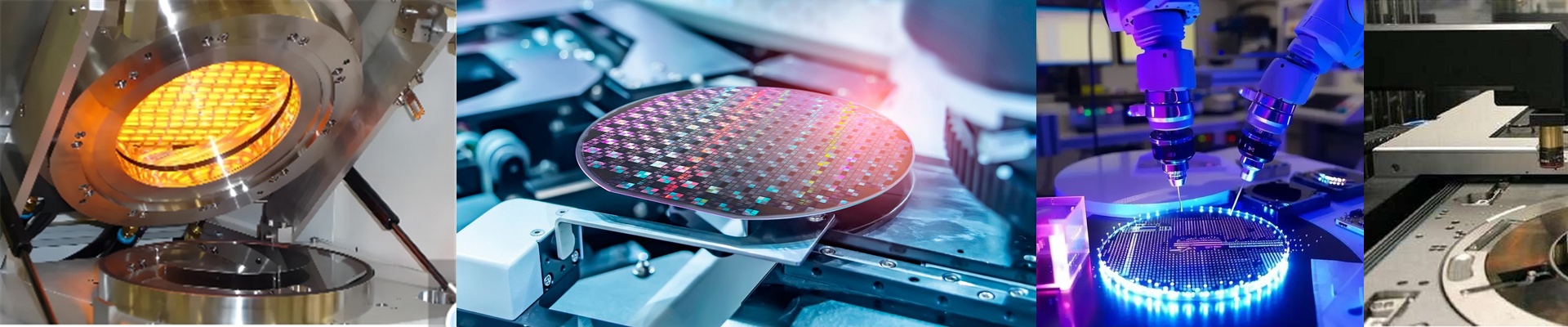

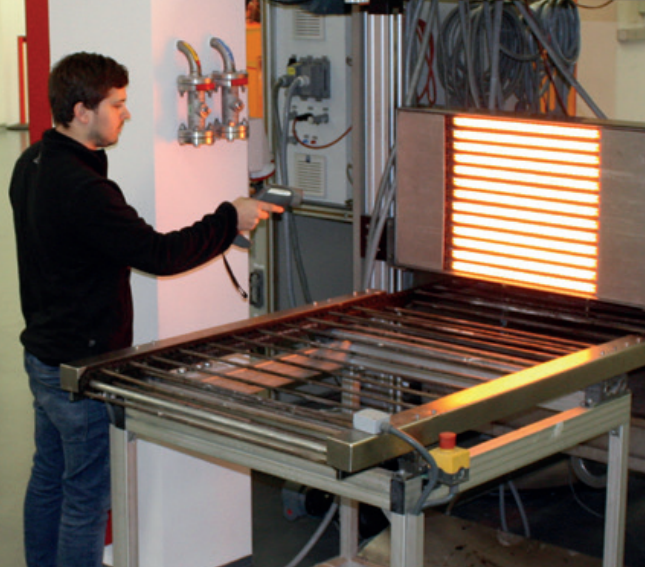
On a 300mm line, a half-degree Celsius drift during photoresist bake is enough to push critical dimension control out of spec. You watch the excursions show up on the SPC charts, and the scrap piles up fast. We built a Precision infrared heater for electronics to keep thermal behavior inside the process window, shift after shift. What matters, technically: The unit runs short-wave NIR emitters in a quartz-halogen design, so response is fast and radiant, settling in under a second. Across the bake zone, wafer-level uniformity holds at ±0.1°C, which keeps line and space dimensions predictable after both soft bake and hard bake. It’s engineered for cleanroom use—Class 1–100 operation, zero particle generation, a sealed housing, and clean-process connectors. Repeatability is ±0.2°C over 24/7 runs, and in pilot deployments we saw zero unplanned downtime. Why it works in litho The bake step sets the photoresist profile and the defect baseline. Stabilizing temperature across the wafer cuts rework and improves yield. You end up with a tighter CD distribution, fewer defocus events tied to thermal drift, and consistent edge bead removal behavior. Because the radiant path heats the target directly, energy draw drops—you’re not heating the chamber. And the emitters last: we’ve run units for 5,000+ hours with less than 5% output drop, so replacements come far less often. Things to keep in mind Installation comes down to emitter-to-wafer distance and view factor; even a small change in the gap shifts the thermal profile. The heater fits standard OEM mounts, but if you’re integrating into a legacy platform, you may need a minor mechanical adapter. Plan for cleanroom ESD grounding, and make sure your controller can close the loop on whatever sensor you choose. Match the voltage and connector to your station, and budget a short commissioning run to lock the recipe down.