

Stop Wasting Time: Why IR Heating Beats Hot Air for Wafers
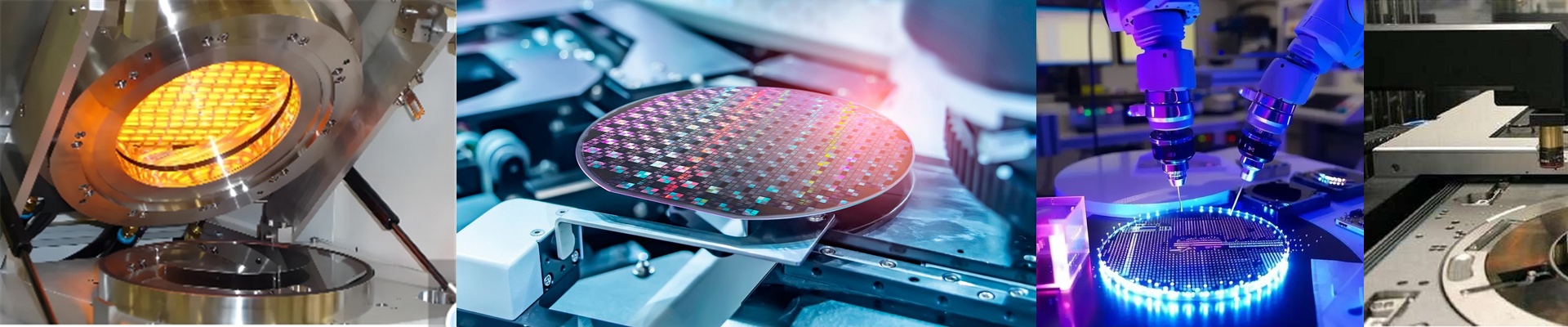
If you’ve spent any time in semiconductor processing, you know the frustration of the “wait.” Using hot air circulation is a bit like trying to heat a whole house just to warm up one cup of coffee. You have to heat the chamber, then the air, and then finally the wafer. It’s slow. It’s clunky. It creates this annoying lag that just eats away at your day. IR heating is different. It basically cuts out the middleman. Instead of messing around with air, it beams energy directly onto the wafer. It’s fast. Really fast. When you’re dealing with hot air, you’re fighting thermal inertia. You spend way too many minutes just ramping up and cooling down. That’s time you’ll never get back, and it kills your throughput. With IR lamps, you hit your target temperature in seconds. It gives you a level of control that feels… snappy. You aren’t standing around waiting for a fan to push air around; you just get to work. But, you can’t just throw a lamp in there and call it a day. The distance between the light source and the wafer is where the real magic (and the risk) happens. If you put the lamps too close, you’ll end up with hotspots or, worse, you’ll burn the edges of your wafer. Too far? And you lose that speed you wanted in the first place. We usually calculate a specific “safety gap” to make sure the heat hits the entire diameter evenly. Plus, since high-density IR arrays put out a massive amount of energy, you need a solid heat sink or a cooling jacket. Otherwise, the rest of your equipment is just going to soak up that heat, and nobody wants a chassis that’s hot to the touch. Now, let’s be honest: IR isn’t a magic fix for everything. There’s a trade-off. With a convection oven, if your wafer is off by a few millimeters, it’s usually no big deal. The air fills the space. But with IR, positioning is everything. A tiny misalignment can mean the difference between a perfect wafer and an uneven mess. You’re essentially trading the “set it and forget it” simplicity of air for the raw speed of light. For most of us, that’s a trade worth making.