
Getting Your Temperatures Right in IR Semiconductor Systems
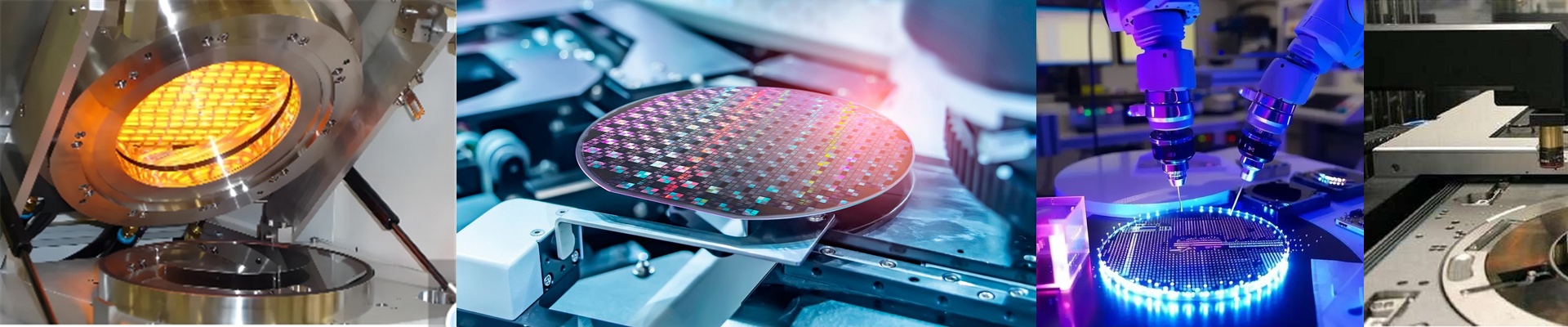
If you’re building out a smart fab, you know that data is everything. But when you’re picking out a semiconductor heater, don’t think of the thermocouple as just another part on a list. It’s basically the heartbeat of your digital twin. In those high-density IR systems, these sensors are the only way to actually know if the heat you’re pumping in is hitting the wafer surface the way you intended.
The tricky part about IR heat
Here’s the thing: IR systems work through radiation, not conduction. Because of that, there’s always a bit of a lag. The heating element hits the target temperature, but the substrate takes a moment to catch up. To handle that gap, we use fast-response thermocouples. Usually, Type K or Type N does the trick, depending on how hot things are getting. We hook those up to high-res controllers so you don’t accidentally overshoot your target and fry something.
Making the “Smart Fab” actually work
A real smart fab needs every single thermal zone to be digitized. We build the thermocouples right into the heater housing so the PLC gets a constant stream of telemetry. This is where it gets useful. You can track thermal drift over thousands of cycles. It means you’ll notice a heating element is starting to give out before it actually dies and ruins a whole batch of wafers. That saves a lot of headaches.
The balancing act
Precision isn’t free—it usually costs you some space. If you mount the thermocouple too close to the IR source, you get radiative interference. Your readings will look higher than they actually are. But if you push it too far away? Your response time tanks. You have to find that sweet spot in the mounting bracket where you get both speed and accuracy. One last tip:**use shielded cabling.**Every time. Fabs are noisy places. All that high-voltage power creates electromagnetic interference (EMI) that can mess with your millivolt signals. If you don’t shield your cables, your data becomes a guessing game. And in this business, guessing is expensive.